Memoir Writing, Women Empowerment
 If I can do it, anybody can
In the 1970s, I was a scrawny teenager from the flatlands of northern Michigan with no idea what I wanted to be when I grew up. I didn’t want to follow my mother’s life, raising three kids, working a secretarial job she hated, and smoking unfiltered Pall Malls. She would say to me, “Whatever you do, don’t take shit from nobody. You go after your dreams.”
Except I didn’t know what my dreams were. An indifferent student, I drifted through school smoking pot and ski-racing. No way could I stand an indoor career like being a nurse, secretary, or teacher.
A Pivotal Moment
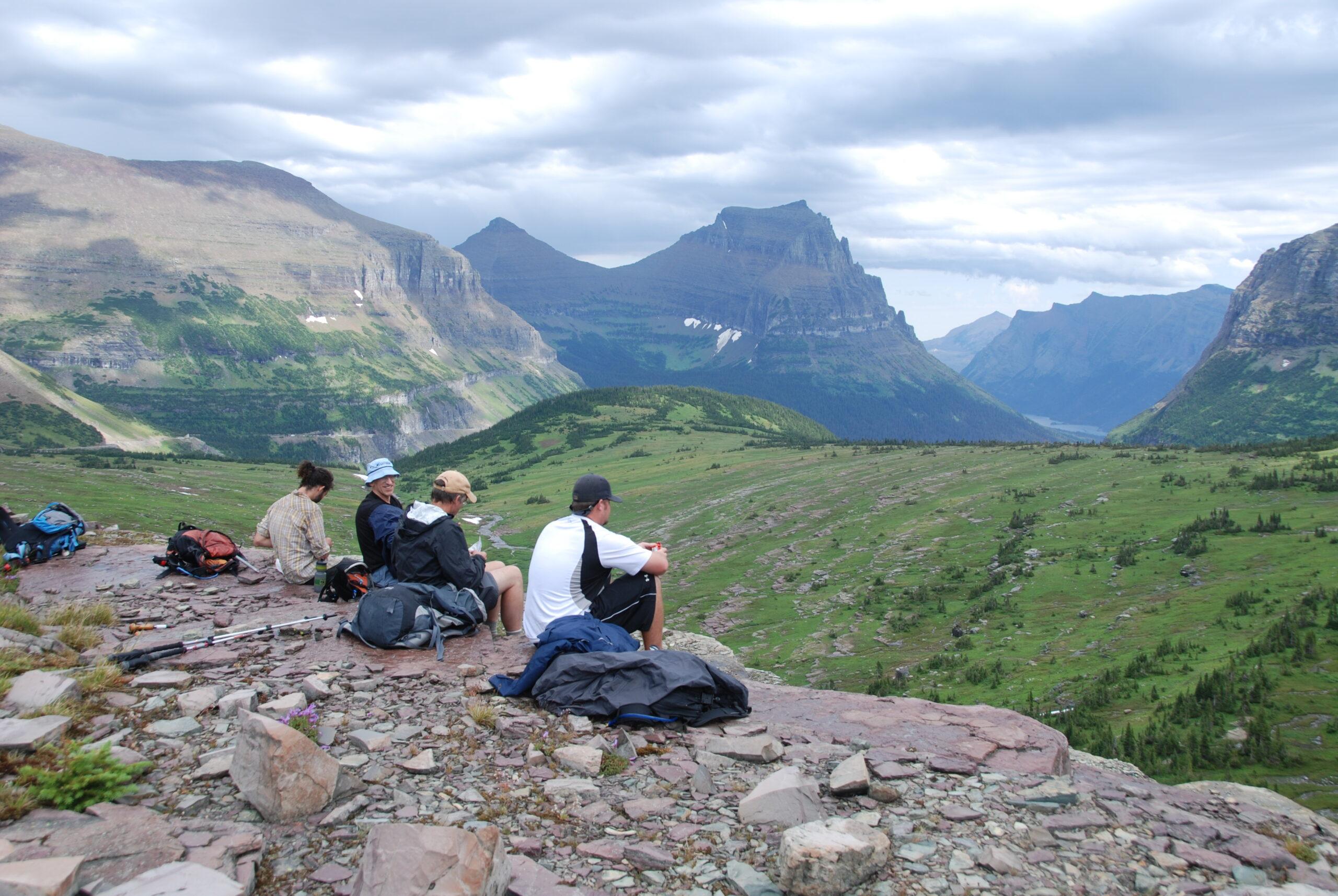
At age fifteen, I went on a month-long backpacking trip to the Bob Marshall Wilderness in Montana. Overwhelmed by the grandeur of the Rocky Mountains, on the first day, I stood at the trailhead with a pack that dragged down my shoulders, hiking boots that rubbed my skinny ankles raw, and a map in my hand full of undecipherable squiggles.
“I don’t know how to read a map.” I whined to the bearded guide. “We are hiking where?”
I really wanted my mommy to rescue me from an adventure far more daunting than I’d anticipated. But mommy wasn’t there. It was time to put on my big-girl pants.
The trip taught me how to read a map, use a compass, and navigate the landscape. It also taught me to refuse defeat, work with a group, and discover the consequences of self-absorption.
Upon my return home, I’d changed. I had fallen in love with great expanse of the west and knew I was destined to live a life of adventure and travel.
But how?
There were no manuals, no female mentors, and no way to make a living for a poor kid from the mid-west in the outdoors.
The mountains called me back for college at the University of Montana in Missoula, where I pursued my outdoor passion. I volunteered as a ski patroller, took an avalanche class, and landed a work-study gig guiding backpacking and ski trips in the US and Canada.
Geology, my topic of study, kept me in the field and forced me to be proficient in map and compass, necessary tools needed for success. I was among a small handful of women in a sea of men in my science courses. I soon learned those male classmates occupied desirable outdoor professions.
To break in, I’d have to find my voice and fight for what I wanted. My mom’s lesson took on new relevance and meaning. Somewhere in my fight to be heard and seen, perseverance and determination blossomed.
I now had a dream and began to chase it.
Recognition and Realization
For the early part of my career, I looked for gold in rocks. I was outdoors but the work didn’t fulfill me.
Then at age 33, I learned about an avalanche that buried three toddlers near their rented condo in Crested Butte, Colorado. They were playing outside while the parents loaded the shuttle bus to the airport. Suddenly, an avalanche barreled down the mountain and completely buried the three children. Two were found within six minutes. The last was located an hour later, under 10 feet of snow and dead. The local avalanche dog had failed to find him.
That horrifying story stuck with me, working deep into my core. I asked myself, “What if I trained a dog to save a life?”
That simple question set me on my journey to serve my community, understand K-9 behavior, ski area medicine, and avalanche search and rescue. With little guidance or formal training, my rebellious black Lab, Tasha, and I learned skills needed to find lost people. We soon discovered most missions were not rescues but recoveries.
We became the search dog team to call in the high country of Colorado. Tasha dug up victims in avalanches, drowned in water, or lost in the woods. She even found victims of crimes. We kept our promise to never leave anyone behind. One mission climaxed in the rare and precious experience of finding a missing boy alive.
I was asked once, what is the best thing I’ve ever done for a human. I answered, “Helping family members find their loved ones.”
Tasha and I received Congressional Recognition for our efforts. Our creative, productive, life-affirming partnership taught me how to find myself, my purpose, my mission in life.
Writing Go Find
The mutual respect, bond, and adventures with Tasha prompted me to write about our search career. Writing a book is like training a puppy. Facts and ideas rambunctiously tumbled and romped through my mind. I had to learn discipline before I could trot out well-crafted story.
Over the past forty years, I’ve carved out a fulfilling and rewarding path as author, wilderness medicine and avalanche educator, desert survival instructor, gold exploration geologist, backcountry risk manager, and K-9 search and rescue handler. And I’m still doing it happily and making a decent living.
I am the consummate traveler and life-long learner having worked on the highest, coldest, and hottest places on earth. For a quarter-century, I’ve led my outdoor educational company, Crested Butte Outdoors, to international acclaim, teaching students from the Secret Service, rocket scientists, and Sherpa guides on Everest.
What I’ve learned about the writing process and my not-so-ordinary career: it’s not a destination you reach one day and you’re there. It’s a path that continues over the ever-changing topography of life. I continue my search, to Go Find better ways to show up as a friend, a writer, an educator, and a mindful leader. I honor the times I’m not connected or energized. I honor the times when I fall behind. Sometimes even the strongest leader must be a follower and I will allow myself to show up as a follower. All roles, equally important.
Looking out my office window today at the snow-covered peaks of the Rocky Mountains, I ask, what would I tell my 15-year-old self who volunteered to go on that hike, in an ill-fitted backpack with bruised and blistered feet, and scared shitless?
I’d tell her, “Good job for sticking it out, taking on the unknown, following a desire, walking with your fears. If I can do it, so can you.”
My unconventional career has turned me into a confident search and rescue leader, an extraordinarily successful business owner, and if I must say so, a pretty compassionate and empathetic human.
Little did I know, I was paving my own wonderful, rewarding way for others to follow.
It’s not too late. You can find your dream and your life’s purpose. I’m here to help.
-The end-
Expert Interviews, Women Empowerment

My Journey to Becoming a Confident Female Leader
When I was fifteen, during my first backpacking trip to the Bob Marshall Wilderness (The Bob), I learned to read a United States Geological Survey 7.5-minute quadrangle map. As a teenager from the flatlands of northern Michigan, the grandness of the Rocky Mountains overwhelmed me. I stood at the trailhead, wearing a too-heavy backpack and holding a sheet of paper the size of a small poster.
“How the heck do you read a map?” I asked our bearded guide, followed by a teenage whimper, “We’re hiking where?”
I wanted to cry. But my mama was one thousand miles away and couldn’t comfort me so that wouldn’t do any good. And why should she? I willingly said yes to a month-long backpacking trip with my best friend Sara and her family. I had zero experience and no idea what I was getting myself into. But Sara’s dad did. At 17, he sat watch —alone, at a fire lookout tower in The Bob.
Although I didn’t realize it at the time, I was wearing my big girl boots, the ones I had never worn. Clunky, stiff, too-big ones that dug into my skinny ankles. The same ones that were later chewed up by a marmot, that helped me climb over mountains, post-hole through the knee-deep snowpack, and cross cold rivers and streams. One injury or navigation mishap in The Bob could turn deadly. After all, it’s home to one of the largest grizzly bear populations and wilderness designations in the lower 48.
PAIN AND SUFFERING BECAME MY TEACHERS.
To survive, I had to stuff my ‘I can’t do this. I QUIT!’ attitude in the bottom of my backpack for the greater good of Sara’s family. And instead, I donned my superhero cape.
That physical, mental, and emotional suffer-fest transformed me from adolescence to adulthood, and eventually from follower—to leader.
ROUTE-FINDING MY WAY INTO LEADERSHIP
Back then, I was not a leader. I was a follower. I took no responsibility for where I was, or where I was going. But I wanted to learn.
The concept of using maps and self-reliance to navigate the world intrigued me and expanded my thinking far beyond my clan of friends and family. I set out to discover everything I could about finding my way. By navigating the landscape, refusing defeat, working with groups, and discovering the negative consequences of self-absorption, I’d become a leader.
LEADING MINDFULLY
I’m enjoying a sunny day in Whitefish, Montana, when my good friend Charlie White calls. He’s hosting a podcast called Move Mountains, Messy Adventures in Mindful Leadership. He wants to interview me. I’m flattered but caught off guard. I know I’m a leader, but a mindful one? Well, that’s an interesting question.
In my quest to discover more about mindful leadership, I turn the tide and interview Charlie.
So Many Types of Leaders
Charlie: There are so many definitions of a leader. We can toss out any number of them. One who empowers others to be their best… one who inspires others to bring their absolute best… One who gets the task done no matter the obstacles. None of them feel complete to me. That’s why we put an emphasis on mindful.
A key characteristic of a mindful leader is the ability to recognize and own the impact of their actions on themselves and others. At the core, a leader must exhibit a level of both self and social awareness that allows them to act accordingly in any situation. Mindful Leaders take action that integrates their attention with intention. They make the choice to show up —and to lead. They know when to stop, get grounded, and listen. Most importantly, they serve a higher purpose on their path.
Susan: I love where you’re going with this. The motto of my company is “Follow Your Path.” Tell me about the path to mindful leadership?
Charlie: The path helps us answer if we are connected to our physical, emotional, intellectual, and spiritual self?
PREPARING FOR THE PATH: SHOWING UP GROUNDED
Charlie: Take for example, your decades-long leadership role in search and rescue. Before you can venture into the mountains to save a life, you have to check-in with yourself first. We call this Grounding. The same is true when you step into a meeting or board room and lead a team.
Susan: I never thought about it like that, but I guess that’s true. What does it look like to get grounded?
Charlie: Stand up. Feel the souls of your feet on the ground. Move your toes. Rock back and forth, and side to side. Let your arms go, shake them out. Soften your eyes but keep them open. Inhale through your nose. Take a long, deep breathe. Hold it for 3 seconds. Let it go, nice and slow. Ask yourself, “what do you notice?” In the next breath, check-in and orient to your purpose. With the final breath, let your awareness and your purpose move you to action.
Grounding requires us to be still long enough to accurately perceive the moment we are in, and to recognize when we are projecting our own narrative onto others.
#1 MINDFUL LEADERSHIP STEP: GROUND TO CONNECT. FIRST WITH YOURSELF, THEN OTHERS.
Charlie: Take this moment to connect with yourself. Be open to what arises. You need to have a check-in with your emotional, physical, intellectual, and spiritual state. Connection to self must be first. Once you do this, then we are prepared to connect with others.
Susan: Okay, so I am here in my office talking to you. I just grounded but what simple questions can I ask myself at check-in to connect with my emotional, physical, intellectual, and spiritual being?
Charlie: Part of connecting is practicing compassion toward yourself. Take this moment to be still. Receive without judgement. Accept the things as they are. Accept yourself and know you are perfect in your imperfection. Can you sit with this truth? In this moment, what can you do to serve yourself?
Susan: The only act of service I know how to do for myself is eat well and take a bath. Our conversation continues one hour later. Okay, Charlie, mission accomplished. I took a lavender salt bath, sat in stillness. I feel grounded. I’m ready for the next step after connection?
Charlie: You’ve connected with yourself. Have you connected with me? Practice that same level of openness, compassion, and service with me. What question would you ask me if you were trying to connect with me?
Susan: Charlie, I appreciate you?Tell me about your day? How’s that for a question?
Charlie: If you are asking me from a grounded place, that is a great start.
#2 MINDFUL LEADERSHIP STEP: GROUND TO ENERGIZE YOUR LEADERSHIP BY IDENTIFYING YOUR VALUES AND PURPOSE.
Charlie: Most people want to get the job done without connection and energy. As a result, projects suffer, motivation lags, people get burned-out. Any task that’s forced will not be your best. So how do we create and articulate energy? Check-in with yourself and then, your team and ask, “Have I identified my values and purpose of the task at hand?” Have you articulated those with clarity?
For example, imagine you’re the team leader on a search for a lost Alzheimer’s patient. Your teammates walk into the cache ready to save a life and you throw them a map with a few circles on it and say, “Go search this area. Now, move!” Your searchers are going to look at you with their eyes crossed and say, “huh? We don’t have enough information. We are confused.”
Susan: Believe me that has happened early in my career when I was not a leader but a team player. We wandered aimlessly in the mountains without success. It was frustrating.
Charlie. Yes. This dis-connect leads to frustration and eventually exhaustion for both parties involved. I bet you lost interest in the task. Never found the person, either.
Susan: I felt the leader wanted to be the hero. We were not a team. He sent me out in the wilderness to get me out of his hair. My input didn’t matter. I almost quit the team. I felt so undervalued, so disconnected to the mission.
Charlie: Yes. It seems the leader forgot to engage with you first by identifying the purpose of the task. There must be clear purpose and mindful leaders must articulate that purpose, as it relates to you. That requires high level of curiosity about you as a team player, clarity of purpose, and ability to clearly articulate with communication the purpose.
#3 LEADERSHIP STEP: GROUND TO GET INTO FLOW
Once a leader is grounded, connected, and energized the team is ready to flow. This state of flow fully engages leaders and teams and has them focused intently on the task at hand. The leader is now practicing perseverance and a growth mindset.
Susan: Amen. My fondest search and rescue memories had to do with the positive feeling of being in flow. The feeling of ecstasy, really. Tasha, my search dog partner, and I along with my husband made a live find for a lost boy in a blizzard at 11,000’ because we communicated clearly how and where we would go together as a team. Tasha, in the heat of the moment new her job. No matter how demanding and challenging the mission she communicated to us she had found the kid by doing her trained re-find, a jump onto my chest with her front paws. As an elite K-9 team, we had to be flexible, adapt to the terrain and weather. Honor our mental, emotional, and physical state.
Charlie: Yes. And you were doing what you loved. You’d found the sweet spot, the balance between challenge and skill. From the mountains to the meeting, our job as leaders is to stay grounded as we guide our team into flow—the state in which people bring their best selves into a task. The experience itself is so fulfilling that people will do it even at great cost, for the sheer sake of doing it.
#4 LEADERSHIP STEP: I HAVE ARRIVED
Charlie: My favorite and the fourth step in the Mindful Leadership Path is called Arrive. It’s a beginning and end. Arrive… sit with and own the results. What happened? Arrive requires that you sit fully present with the situation as it is, to recognize the choices that went into creating the reality you are experiencing and owning your part in the process. Arrival is a state of reflection. It invites us back to “connect” and the cycle continues…. remaining grounded throughout the entire process is paramount.
Susan: Why is mindfulness so significant to being a leader?
Charlie: Unless you are a monk, it’s very unlikely you have the skill to bring flow to every moment. Most of us are likely looking to be happy in our search for meaning and purpose. For most of us with jobs and kids, we don’t make time to be still, let alone make time for authentic connection before attacking the to-do list. Though I am seeing this slightly shifting with our responses to COVID-19. We are home. There is no better time to show up and connect with yourself and family.
Charlie is quick to remind me, “None of us are perfect at this. Mindful leadership means having to initiate or participate in difficult discussions. We all have those challenges, the same challenges for those who are aspiring to be leaders.”
When I first started this post, I considered myself a leader. Why didn’t I just say, “Susan, you are a leader!” If I was a true leader, would I be questioning my leadership? If I were a man, would I be questioning myself as a leader? I’m a strong, independent woman, a fixer, the breadwinner, an outdoor risk manager. Why am I questioning myself as a leader when I know that inherently I am one?
In what aspect do we really show up as leaders in our lives?
“Why do I hesitate in my personal life and not in my professional life?”
Surely, I know by now that hesitating isn’t leading. In my memoir, Go Find: My Journey to Find the Lost—And Myself I showed how this shy but ambitious woman, who lacked self-confidence (yes, me) followed her passion, forging a path in uncharted territory. That woman fought her way through misogynistic worlds of ski patrol and search and rescue in the heart of the Colorado Rockies. My purpose was clear: to train my stubborn, independent black Lab puppy Tasha and myself how to rescue people in the wilderness. This woman proved, “I am here to save lives, and save my own (even though I didn’t know it at the time) and teach others to do the same.”
If I hadn’t of shown up with an instinct to lead, life would have pulled me in a direction that might have left me both broke and broken. This entire journey and the help of my friend’s family morphed me into a confident search and rescue leader, a successful business owner, and if I must say so, a compassionate and empathetic human.
In reflection and after this interview with Charlie, I now realize I could have done better navigating my younger Susan. Had I known or had a better understanding of ‘how to show up’ with attention, intention, and action, known about mindful leadership and the path to connect, energize, flow and arrive, perhaps I would have had the skills to navigate office and small-town politics, a rocky marriage and my journey with Tasha with more finesse.
After the publication of Go Find, I’ve written newsletters, reached out and connected with hundreds, perhaps thousands, of readers over the past two years … I see now, “I have been on the path to mindful leadership all along.”
In Hindsight
I’ve learned mindful leadership is not a destination you reach one day and you’re there. It’s a path that continues over the ever-changing topography of life. I continue my search, to FIND better ways to show up as a friend, a writer, an educator, and a leader, a mindful one no less. And, I will honor the times I’m dis-connected. Sometimes the strongest leaders need to show up as non-leaders. All roles, equally important.
Looking out my Montana office window today at the snow covered peaks of the Rocky Mountains, I ask, What would I tell my scared-shitless 15-year-old self who volunteered to go on that hike, wearing an ill-fitted backpack and ended up with bruised and blistered feet?
I’d tell her, “Thanks for walking with your fears, following your desire, and exploring personal fulfillment as messy as it was. You did it.”
Then, I ask, “what’s next?” My purpose is clear. Finding peace in the midst of Covid-19 and uncertainty is achievable! It requires showing up. It requires sitting with yourself for a few minutes each day and asking, “how am I really doing today?” Having a real an honest conversation with yourself, a lover, or teammates can be scary, hard. It requires compassion and permission. I give you permission. I hope my future essays, zoom chats, and Montana Mindfulness Retreat will help you connect with yourself, so you can connect with others. Serving others is our highest calling. We’re here to lead you.
Namaste, Susan
Follow Susan on Instagram, Twitter, Facebook and Linkedin. Follow Charlie on Instagram and Linkedin.

 If I can do it, anybody can